Any night of the week is a special time to be at Sawbill Lake, but Saturday nights are particularly special. Each Saturday at 7:30pm the Forest Service puts on a free naturalist program at the picnic area near the landing. Everyone is welcome to attend the event and a fire and s’mores are provided! The topic of the program varies week to week, but so far this season there have been talks on bogs, beavers, wolves, and more. If you’re looking to learn more about this beautiful place and happen to be in the area on a Saturday night, swing on by! We’ll see you there!
-Siri
Kit learns what it’s like to be a wolf! Grey wolves have warm coats, impressive intelligence, and are great runners!
8/1/22 – Living on the edge of the wilderness, we are so fortunate to see a lot of fascinating wildlife in our backyard. If you hope to see these awe-inspiring animals yourself, be aware of your volume and always keep a safe distance. To be an unobtrusive observer of the wilderness is such a gift. Long time camper and friend of Sawbill Tim Petricek captured some amazing photos of our neighbors for your enjoyment! -Matthew
Larry the Loon teaching their child how to fish.
Mickey the Moose getting a well deserved drink of water after a long day.
Gertrude the Grouse posing for their close up.
Steve and Sue enjoying an evening swim together for date night.
7/31/22 – Friday was the 18th annual Christmas in July! Since we spend Christmas in December scattered across the country, we choose 1 night every July to transform Sawbill into a winter wonderland. Carols are sung, cookies are decorated, a tree is erected, mistletoe is hung, homemade gifts are exchanged, and a proper feast is prepared. It is my personal favorite Sawbill holiday because everyone brings a piece of their family tradition and shares it with the crew. Merry Christmas to all and to all a good summer! -Matthew
From left to right: Clare’s blueberry chutney tarts, David’s Manicotti and quinoa blueberry salad, Clare’s Challah, and Jr/Diana’s cardamom bread. Not pictured: Desserts and the hours of labor each of these dishes took.
The whole crew gathered around the table as gifts are passed out by Kit, Sig, and Mia.
COOKIES!
Special shout out to Walt and Kyle for this INCREDIBLE homemade birch bark visor.
Luigi was found alive and well near Seagull Lake on 7/25. For those reading different BWCA forums alerting paddlers to look for him near lakes Kawishiwi and Polly, please note that he is no longer in the wilderness.
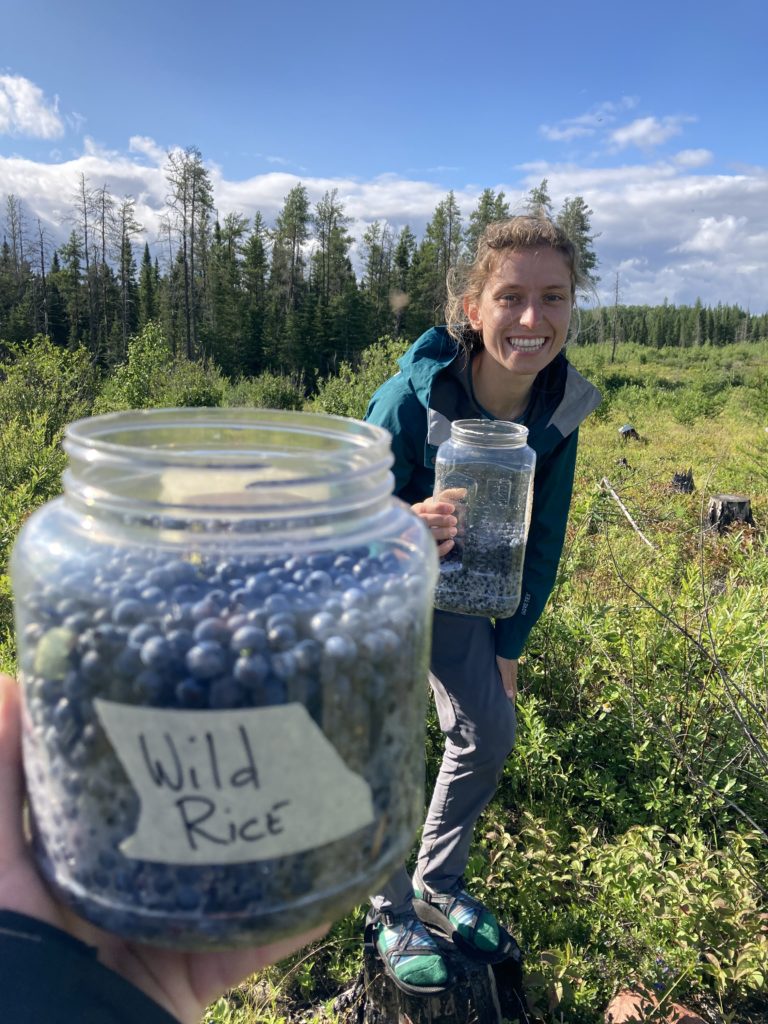
7/27/22 – All the rain up here in the north woods has brought at least one good thing with it – a fantastic berry haul!
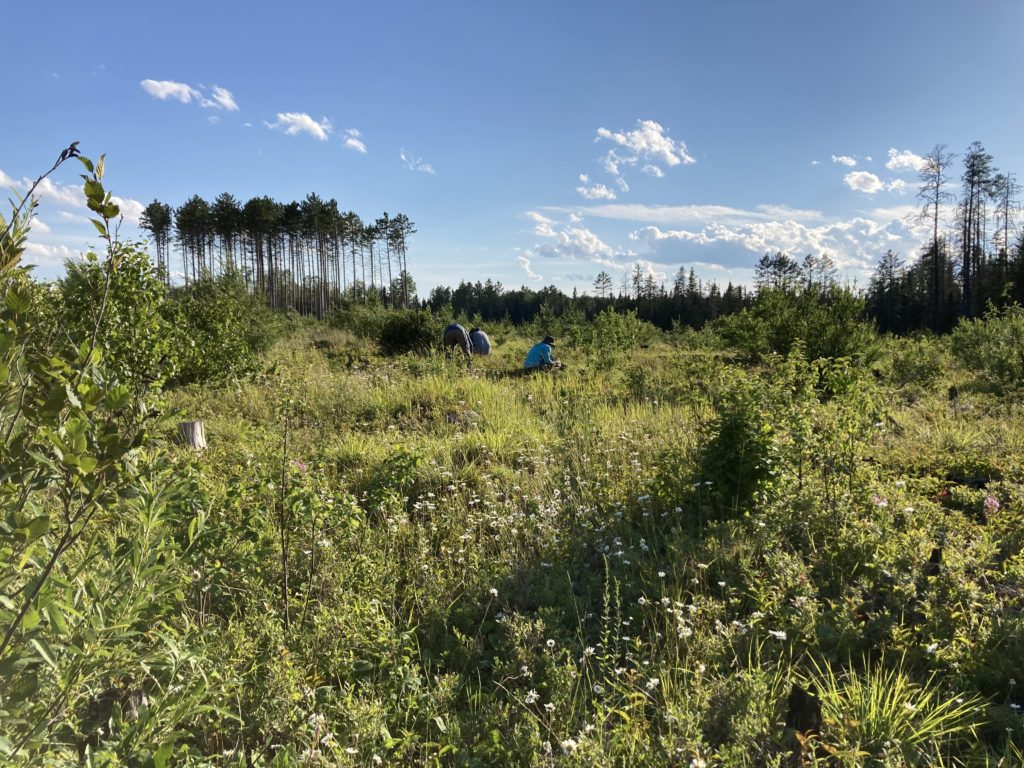
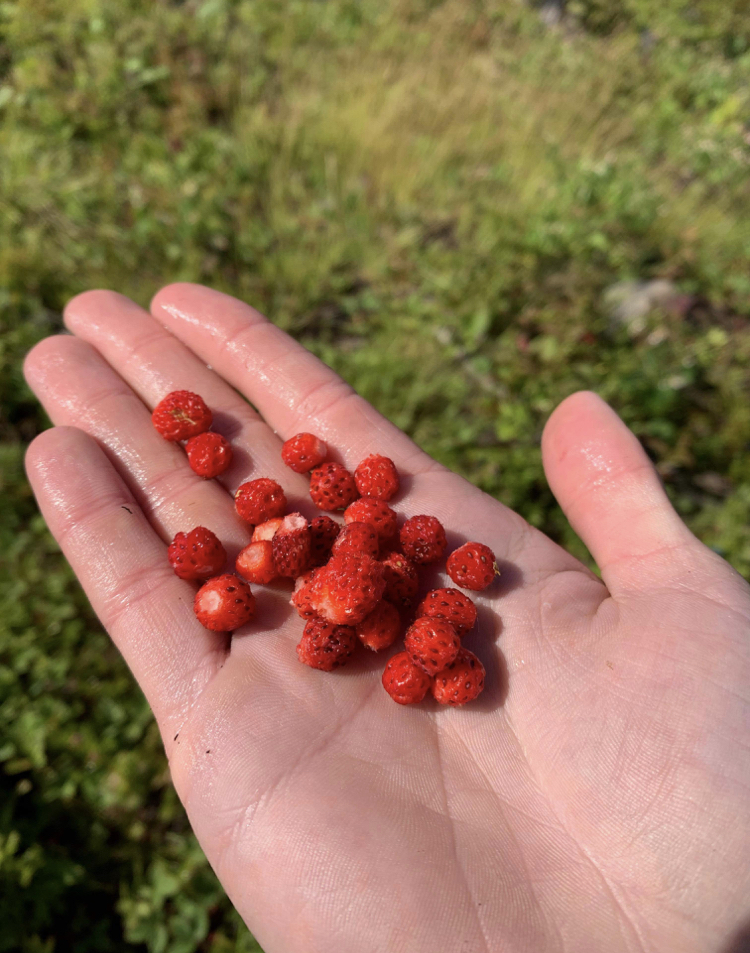
The blueberries and strawberries are out in force, and some shy raspberries are starting to ripen as well. Berry patches are all over the place near the Sawbill Trail and are food sources for lots of wildlife during the late summer and early fall. Bears, squirrels, moose, and various birds all frequent berry patches, so if you pull over to gather some, make sure you do a quick scan of the clearing to see if you have a picking partner you didn’t plan for!
Some pickers like to bring plant books with them on their outings to help identify the fruit and plants they see. Blueberries and strawberries are widespread and easily identifiable, but when in doubt, check to make sure a berry is edible before picking it! The north woods are home to several varieties of berries that are better left to the wildlife and shouldn’t be eaten by humans.
When you go, make sure to bring a big picking bucket, especially with the huge number of blueberries that are ripe right now. If you do end up with an overflowing blueberry emergency, you can always eat some to clear up space:)
-Lars
Berry picking in a patch near the Sawbill Trail last week. Crew member Katie and her bucket – still needs some filling!Some small north woods strawberries that were quickly eaten after this photo was taken.
This week, Clare and Dan have made the terrible mistake of handing control of the Sawbill Instagram account over to members of the crew. The crew will be recording their day-to-day activities via Instagram story for the next couple of weeks, so if you’ve ever wondered what it’s like to be a crew member up here, now’s your chance to find out more! You can follow along at @sawbillcanoeoutfitters on Instagram — and for you die-hard blog readers, don’t fret! We’ll still be posting updates here on the newsletter as we always have. Enjoy! — Owen S.
7/9/22 – There’s not much better in this world than sitting on a dock watching the sun set after a full day of swimming, paddling, game playing, catching up with old friends and family, bird watching, berry picking…..you know what I’m talking about. If you can’t make it up here this year, here are a couple of pictures from just such a moment to tide you over.
This week at Sawbill we’ve been blessed with not one but two different evenings with visible aurora to the north. Auroras are the result of disturbances in the magnetosphere caused by solar wind or high solar activity and are generally easier to spot in high-latitude regions (the arctic and antarctic). While we are well to the South of the Arctic Circle here at Sawbill, we benefit from living in the world’s largest IDA-certified dark sky sanctuary. Still, it’s rare that we get visible and active Northern Lights in the BWCA, let alone twice in one week! The second night of Aurora in three days occurred on the same night the Sawbill crew welcomed an additional member to its ranks; Graham arrived on the 4th of July to round out the last of the full-season employees, and naturally the Sawbill crew had to make their way down to the landing for the greatest fireworks show nature has to offer. — Owen S.
6/26/22 – Sawbill Lake is a great place to start a multi-day canoeing trip, but it’s also a perfect launching point for day trips into the wilderness. In addition to the BWCA entry point right here on Sawbill Lake, the Kawishiwi Lake, Baker Lake, Homer Lake, and Hog Creek entry points are all easily accessible by car and offer entry to areas of the Boundary Waters that are just out of striking distance from the Sawbill area.
Regardless of where day paddlers choose to start, the U.S. Forest Service still requires a day permit to be filled out by every group putting in. Day permits are available at every entry point inside of a cabinet by the canoe launch, conveniently letting paddlers access the wilderness without having to rush and reserve a multi-day permit weeks in advance of their trip. Fill out a slip (drop the Forest Service copy in the drop box inside the cabinet and keep yours in a dry, accessible place on your boat), and you’re all set to get out on the lake!
Day-tripping requires very little equipment – much less than needed on a multi-day trip. That 75 pound portage pack a paddler carries on a four day trip can be replaced with a small pack filled with fishing gear, sunscreen, and a tasty lunch. Additionally, without the worry of making it to a certain lake on a planned route, day trippers can relax on several lakes with lots of time to explore each one’s nooks and crannies. Leisurely swims, quality fishing, and the potential to see some wildlife are all wonderful pros of day-tripping that canoers paddling for multiple days could miss. The Sawbill crew loves to take advantage of the day trip’s flexibility, and often come back with great stories, good pictures, and if we’re lucky, a freshly caught walleye or two.
If a multi-day trip into the Boundary Waters doesn’t quite fit your situation, remember that day trips are always a fantastic option. And if you decide to use the Sawbill Campground as a base camp for your day-tripping adventures, the Sawbill Store always has extra s’more stuff that those folks on a four day expedition might have already run out of…
-Lars
Here’s a nice, calm corner of the forest that caught my eye on a day trip near East Pipe Lake.A good looking snapping turtle basking on Smoke Lake. Video taken by crew member Evan on a day trip last week.
The BWCA is no stranger to windy conditions, but every season there are some days that are windy enough to force paddlers off the water. Last Thursday was marked by high winds across the Boundary Waters with gusts reaching up to 30mph near Clearwater Lake and gusts on Sawbill clocking in at 17.2 mph. Wind is perhaps one of the more challenging weather events to navigate because there is no one answer on how to paddle in it. One’s response to paddling in the wind depends heavily on personal comfort, experience, wind speed, gear, and a myriad of other factors. Below are some items to consider when paddling on a windy day along with some tips on how to paddle in it.
First and foremost, before I dive into the nuances of paddling in windy conditions, I cannot stress enough that personal comfort is a key factor in the decision making process when paddling in suboptimal conditions. If you or your partner are not comfortable with the conditions at hand, do not paddle. Gut instincts and personal comfort are an important and valid consideration in the decision making process.
Tips for paddling in the wind-
An empty canoe can be less stable than one loaded with gear. Those who are going on day trips usually don’t have 70lbs of gear with them. There are a few things that I like to recommend for folks going out for day trips on windy days:
Bring a backpack with extra water bottles or heavier weighted items. A day pack loaded with heavier items might add to what you have to carry on portages, but the extra weight is appreciated on windier days. Set your pack on the floor of the canoe and stack it in such a way that the weight of your pack is centered and your canoe is well balanced.
Consider carrying extra dry bags with you. When I’m solo paddling I always bring at least one empty dry bag just in case I run into choppy conditions. If the wind picks up and the canoe feels unstable, simply fill up the dry bag with water from the lake and close it properly. This instantly gives you extra weight and you don’t have to carry it with you on portages. Simply return it to the lake from which you got it once you make it to your portage/exit and are done with it. Rocks can also work in the same way, but there are a few additional things to think about. Consider the impacts of relocating rocks (think if everyone did this) and also think about whether it will cause damage to your canoe. This method requires extra caution when placing them in the bottom of the boat. Kevlar canoes especially are at risk for getting scratched up.
Lowering the weight in the canoe can also help to stabilize it. Place packs flat against the bottom of the canoe. Additionally, you can lower your legs or kneel if the conditions get choppy. If you typically sit with your knees bent while paddling, you can straighten them out, thus lowering their position in the canoe. In especially windy scenarios, you can kneel on the floor of the canoe as well. This method gets more of your body below the gunwales (providing increased stability) and still allows you to have a wide range of mobility for paddling.
Paddle with the direction of the wind if possible. In some instances this may change, for example if the waves run the risk of going over the bow or the stern (a scenario in which I would advise newer paddlers to get off the water), but in most applications paddling with the wind will help to keep you and the canoe feeling stable. Depending on your destination, paddling in either of these directions might not be reasonable. In this case, you can cut across the waves at a 45 degree angle. You may have to zigzag across the lake to get to your destination, but it is much safer and much more stable than paddling perpendicular to the wind and waves where things can go wrong quickly.
Choose where in the lake you want to paddle. Oftentimes, close to the shoreline is best. If things get worse you can make it to shore quickly and get off the water. Additionally, in the event that you capsize, it’ll be easier to find your bags and gear. Another thing to consider is the direction of the wind. If wind is coming straight from the west, then the western part of the lake will likely be the calmest portion for paddling. It will be the most sheltered from the wind and it won’t have the accumulation of waves and chop that the eastern side will. Additionally, landmarks such as islands or peninsulas can offer respite from rough conditions.
Solo paddlers- consider bringing a kayak paddle with you. Ultimately, this comes down to personal preference, but I like using a kayak paddle in windy conditions for a number of reasons. With a kayak paddle I find that I have a faster reaction time to gusty winds and rough waves. I am able to quickly switch paddling from one side to another without having to take the extra second to adjust as it would with a normal canoe paddle. Additionally, I feel I can paddle faster and have a higher turnover rate, thus decreasing the amount of time I spend out in windy conditions.
What to do if conditions get worse-
If conditions get worse while you’re on the water, consider your options. A lot of times the best thing to do is to get off of the water and wait for the conditions to improve. There is nothing wrong with waiting it out on shore. It’s much better to wait on land until you feel comfortable with the conditions, than risking your safety and gear by paddling in adverse conditions. Whether that’s a campsite, a portage trail, or the closest point you can get to, feel free to wait it out. Others may continue to paddle if they’re comfortable and experienced, but just because others are doesn’t mean your group should. Use your judgment, express your comfort levels with your group, and consider everyone in your party when making decisions. The wind won’t last forever and taking a break can serve as a good opportunity to rehydrate and refuel.
-Siri
The wind starting to die down on Pine Lake after a windy day of paddling. Taken on 6/16/2022.